Uncategorized

What is a capnograph and how does it work?

Capnography

What is a capnograph?

Capnography is an advanced medical procedure used to monitor and measure the concentration or partial pressure of carbon dioxide (CO2) in exhaled air and arterial blood. It is one of the simplest and most effective ways to measure vital signs during anesthesia and critical care. Using capnographs, doctors can simultaneously monitor patients' respiratory status and indirectly assess the partial pressure of CO2 in arterial blood.

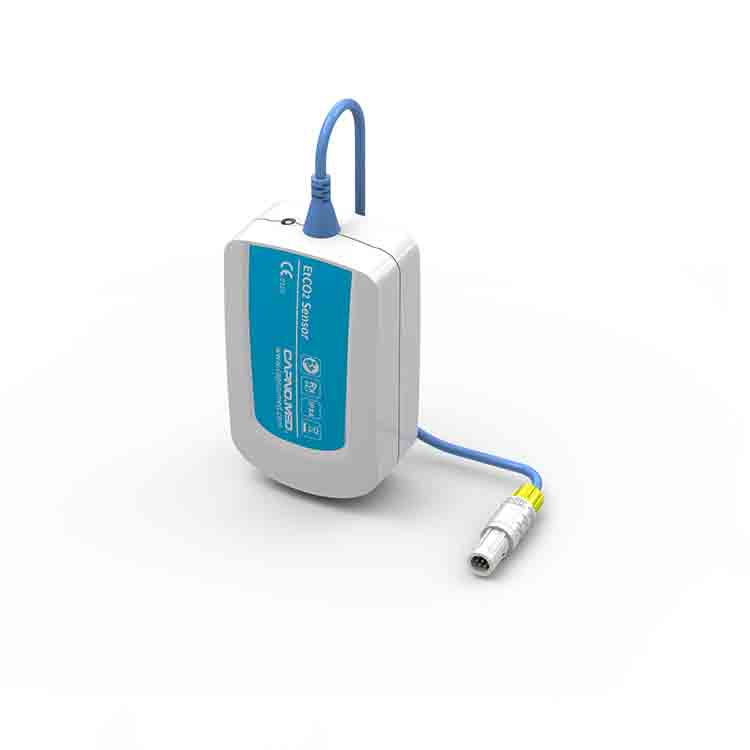
Capnography Device , also known by other names such as capnography device , capnometer or capnogram , which displays the amount of carbon dioxide in exhaled air as a graph in millimeters of mercury and time or, less commonly, displays the volume of exhaled air. In healthy people and under normal conditions, there is a small difference between the relative pressure of carbon dioxide in exhaled air and the relative pressure of carbon dioxide in arterial blood, but in conditions such as lung disease or heart failure, this difference reaches more than 1 kPa.

Capnograph devices, such as the Capnocheck Plus BCI, are widely used in intensive care units and operating rooms. They provide graphs of exhaled CO2 concentration, allowing doctors to quickly identify changes in a patient's respiratory status.

Application of capnography

Capnography has numerous applications in various medical conditions, including:

  1. Monitoring respiratory conditions during anesthesia : This method helps doctors monitor the CO2 concentration in the exhaled breath of patients under anesthesia and prevent respiratory problems.
  1. Diagnosis of airway obstruction : By measuring CO2 concentration, possible obstructions in the airway can be identified. Monitor and prevent respiratory problems.
  1. Diagnosing airway obstruction : By measuring CO2 concentration, possible obstructions in the airway can be identified.
  1. Accident prevention : Capnography can prevent 93% of accidents during anesthesia, such as hypoventilation and mistaken intubation.
  1. Diagnosis of lung diseases : This method helps diagnose diseases such as bronchitis, chronic obstructive pulmonary disease (COPD), congestive heart failure, pulmonary embolism, and asthma.
  1. Measuring respiratory rate : Using capnography, the number of breaths and their regularity can be examined.
What is capnography?

How the capnography device works

  1. Collection of respiratory gases : The capnography device collects respiratory gases from the patient. These gases include oxygen and carbon dioxide.
  2. Gas analysis : Using various technologies, the amount of carbon dioxide exhaled in respiratory gases is measured. This information helps us estimate the body's metabolic rate.
  3. Calculating metabolic rate : Based on the amount of CO2 produced, the body's energy expenditure can be indirectly calculated. This method is particularly useful in clinical settings and for monitoring patients under anesthesia or in intensive care.

Changes in the shape of the capnogram curve can help identify respiratory or metabolic problems. For example, a sudden increase in CO2 levels may indicate respiratory problems, while a sudden decrease could indicate hyperventilation.

The amount of CO2 measured at the end of expiration (ETCO2) is used as an important indicator in interpreting capnography results. Normal ETCO2 values ​​are usually between 35 and 45 mmHg . Changes in these values ​​can indicate the following problems:

  • Increased ETCO2: May indicate hypercapnia (increased CO2 in the blood), which can be due to breathing problems, heart failure, or increased CO2 production in the body (such as fever).
  • Decreased ETCO2: May indicate hypocapnia (decreased CO2 in the blood), which can be due to rapid breathing (hyperventilation) or problems with ventilation of the lungs.

What is the difference between capnography and ETCO2? 

Capnography is a broader term that refers to the measurement and analysis of carbon dioxide (CO2) levels in a patient's breath.

EtCO2 specifically refers to the measurement of the maximum concentration of CO2 in a patient's exhaled breath, which is important in assessing ventilation and respiratory status.

What are the basic principles of capnography?

Capnography works on the principle of infrared radiation being absorbed by carbon dioxide (CO2). In this method, a beam of infrared radiation is passed through inhaled and exhaled gases. When CO2 is present in these gases, some of this radiation is absorbed by the gas, reducing the amount of radiation reaching the second sensor. This process allows doctors to determine the amount of CO2 in the inhaled air.

Effect of other gases

The presence of nitrous oxide gas in the composition of inhaled gases can affect the absorption of infrared radiation . This technique was introduced as a reliable method in 1864 by John Tyndall , although the devices were complex and cumbersome for clinical use in the 19th and early 20th centuries.

Clinical applications of capnography

Capnography provides useful information about:

  • CO2 production
  • Lung blood supply
  • Airbag ventilation
  • Respiratory pattern
  • The rate of CO2 removal from the respiratory system during anesthesia

The shape of the capnography curve can be affected by certain lung diseases. In particular, obstructive lung diseases such as bronchitis, chronic obstructive pulmonary disease, and asthma can affect the shape of the curve because in these conditions, respiratory gases mix with each other in the lungs.

Types of capnographs

The effect of diseases on capnography

Conditions such as pulmonary embolism or congestive heart failure affect pulmonary blood flow but have little effect on the shape of the capnography curve. These conditions affect more the relationship between exhaled CO2 and arterial CO2.


Metabolism measurement

This device can be used to measure carbon dioxide production as well as metabolic rate . For example, increased CO2 production is seen during fever and chills, while decreased levels occur in conditions such as anesthesia and hypothermia.


Qualified individuals to provide capnography services

People qualified to prescribe capnography include critical care nurses, pulmonologists, anesthesiologists, internists, emergency medicine specialists, or emergency room technicians.

Working together, these individuals collect vital information through capnography and help improve patients' condition.

Types of capnographs

Capnography is divided into two main types, the choice between Mainstream or Sidestream method depends on the patient's condition and clinical needs. For example:

  • In the operating room or when real-time, accurate information is needed, the Mainstream method is preferred.
  • In the intensive care unit or when lighter and more flexible equipment is needed, the Sidestream method would be more appropriate.

Overall, both capnography methods provide valuable information, and the choice of the appropriate method depends on several factors such as the patient's condition, the type of monitoring required, the available facilities, and the experience of the medical staff .

1. Mainstream Method (Direct)

In this method, the measurement sensor is placed in the patient's exhaled air path. In other words, the sensor is installed directly in the breathing tube (such as an endotracheal tube or breathing mask) and measures CO2 data in real time and directly.

Features of the Mainstream Method

  1. Benefits:
    • Fast and real-time response.
    • Higher measurement accuracy.
    • Suitable for patients who require close monitoring, such as patients in the operating room or under anesthesia.
  2. Disadvantages:
    • Larger and heavier equipment.
    • Increased weight on the breathing tube, which may be problematic for some patients.
    • Needs more cleaning and maintenance.


2. Sidestream method (indirect)

In this method, a sample of exhaled air is passed through a thin tube to a sensor located in a capnography device. The device analyzes the CO2 data from this sample.

Features of the sidestream method

  • Benefits:
    • Lighter and more compact (no weight is added to the patient's breathing tube).
    • Greater flexibility for use in different patients (such as infants or patients with special conditions).
    • Suitable for long-term use or in intensive care units.
  • Disadvantages:
    • Time delay in displaying results due to air sample transfer.
    • Possibility of blockage of the sample transfer tube, especially if there is discharge or moisture.
    • Less accurate than the Mainstream method .
Pulse oximetry

Advantages of capnography over pulse oximetry

Both capnography and pulse oximetry are important tools in monitoring patients' respiratory status, but capnography has more advantages than pulse oximetry in some cases. Here are some of the advantages:

1. Faster detection of respiratory changes

Capnography directly measures exhaled carbon dioxide (CO2) levels and reveals changes in a patient's respiratory status more quickly than pulse oximetry. This feature is especially critical in critical situations such as respiratory arrest or airway obstruction.

2. Confirming the correct location of the endotracheal tube

One of the primary uses of capnography is to quickly and accurately confirm the placement of an endotracheal tube in a patient. It can show whether the tube is properly placed in the trachea or has been incorrectly inserted into the esophagus. This capability is not available with pulse oximetry. 

3. Ventilation quality assessment

Capnography provides detailed information about the quality of a patient's ventilation, including exhaled carbon dioxide and minute ventilation. This information is very useful for adjusting mechanical ventilators, while pulse oximetry only indicates blood oxygen saturation and does not provide information about ventilation.

4. Respond faster to changes

Pulse oximetry may be delayed in responding to changes in blood oxygen levels because the device takes time to reflect changes in oxygen saturation. In contrast, capnography shows changes in carbon dioxide levels almost instantaneously.

5. Application of capnography in specific situations

Capnography is more useful in certain situations, such as surgeries, general anesthesia, and monitoring patients with endotracheal tubes or mechanical ventilation. It can detect breathing problems even before blood oxygen levels drop, while pulse oximetry only alerts when blood oxygen levels have dropped.
While pulse oximetry is a simple, noninvasive tool for monitoring blood oxygen levels, capnography is superior in many cases due to its ability to more quickly detect respiratory changes, assess ventilation quality, and confirm endotracheal intubation placement. The two tools are often used in conjunction with each other to provide more comprehensive information about a patient's respiratory status.
 

Devices similar to capnographs

A capnograph is a medical device used to measure the amount of carbon dioxide (CO2) in a patient's exhaled air. It is particularly useful during anesthesia and intensive care. However, there are other devices that can provide similar information:

  1. Capnometer

Capnometers are devices specifically designed to measure the amount of CO2 in exhaled air. These devices can be disposable or electronic and help doctors assess a patient's respiratory status.

  1. Respiratory monitoring devices

These devices can simultaneously measure various respiratory parameters, including oxygen and carbon dioxide levels. Some of these devices have the ability to display information graphically and can help doctors assess the patient's condition.

  1. Ventilator devices

Modern ventilators usually have CO2 monitoring capabilities and can automatically measure the amount of carbon dioxide in a patient's exhaled air. This feature is especially important in emergency and anesthesia settings.

Conclusion

Capnography is a vital medical technique that measures the concentration of carbon dioxide (CO2) in a patient's exhaled air. This method allows doctors to simultaneously monitor the respiratory status of patients and prevent respiratory problems, especially during anesthesia. Given the diverse applications of capnography in diagnosing diseases, monitoring respiratory conditions, and preventing accidents, this technique is recognized as an essential tool in the field of medical care.

Capnography is divided into two main types: Mainstream and Sidestream capnography, each with its own characteristics and advantages. In addition, capnography is superior to other techniques such as pulse oximetry due to its greater speed and accuracy in detecting respiratory changes.

Finally, to effectively use capnography, qualified and authorized individuals, such as nurses and specialist physicians, must be fully familiar with this technique so that they can effectively utilize the information obtained from it to improve the patient's condition.

Experts from the world of radiation medicine are at your service to provide complete information about the capnography device.

2 thoughts on “ What is a capnograph and how does it work?

  1. Mobina Zafari says:

    Thank you.

  2. Neda says:

    Useful information provided, thank you.

Leave a Reply

Your email address will not be published. Required fields are marked *